Market Update | September 3, 2026
On Wednesday the Bank of Canada held its rate at 2.25% for the seventh meeting in a row. Nothing changed on the surface, but the tone did, and the bond market has been busy all summer. Here’s what matters.
The decision: Rate unchanged at 2.25%. Prime stays at 4.45%. Anyone with a variable mortgage or HELOC sees no change this month.
Why they held:
The key takeaway: The Bank said inflation risks have increased and it’s “prepared to adjust” if needed. It didn’t promise hikes, but it stopped hinting at cuts.
For variable-rate holders: No change to payments. A variable is still a sound choice, but plan on prime staying flat rather than falling.
For buyers: Stability is good news. A rate that isn’t moving is one you can plan around. With fixed rates edging higher rather than dropping, the advantage goes to buyers who are ready with a rate hold and a current pre-approval.
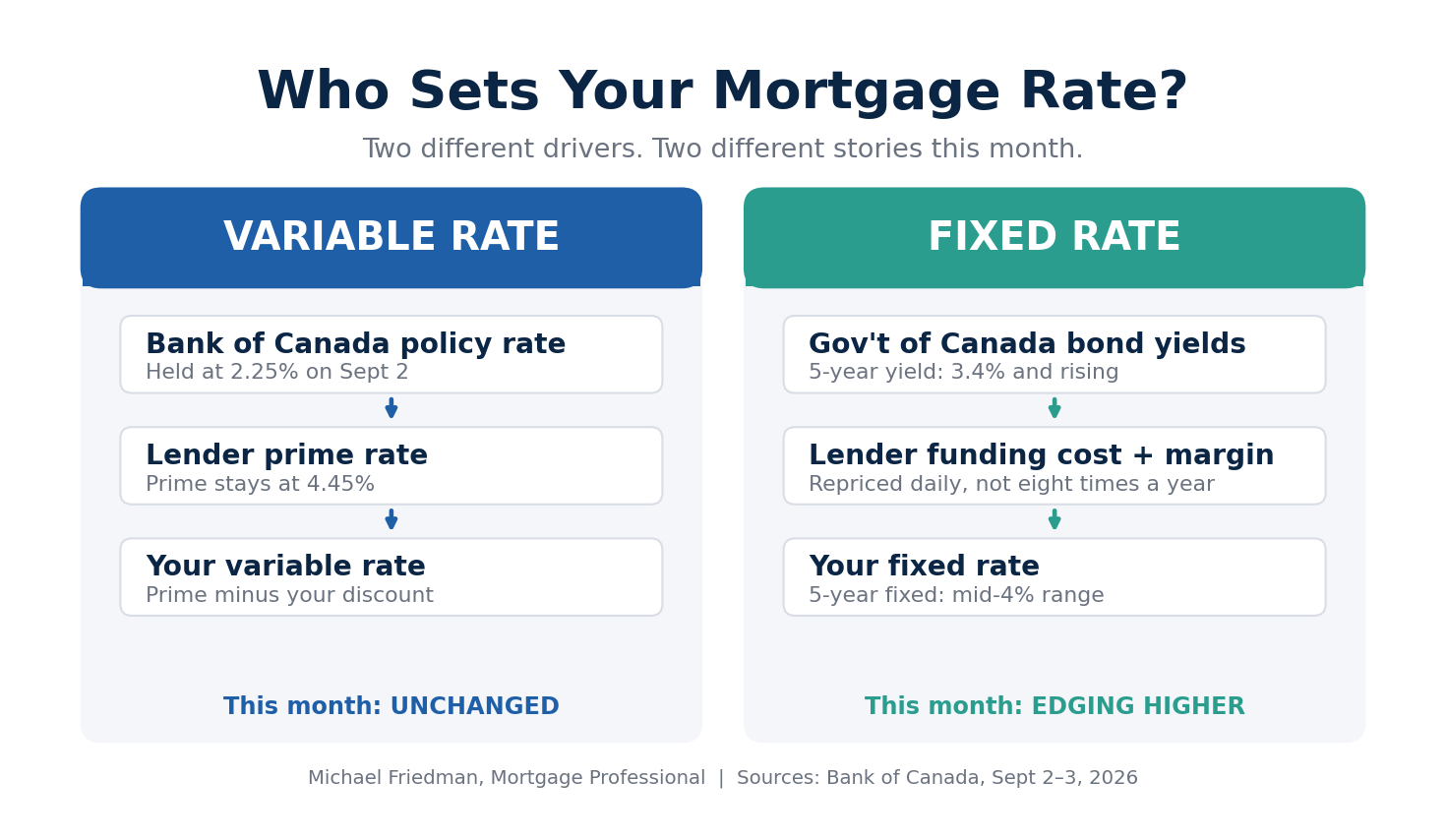
The Bank of Canada does not set fixed mortgage rates. Lenders price them off the 5-year Government of Canada bond yield.
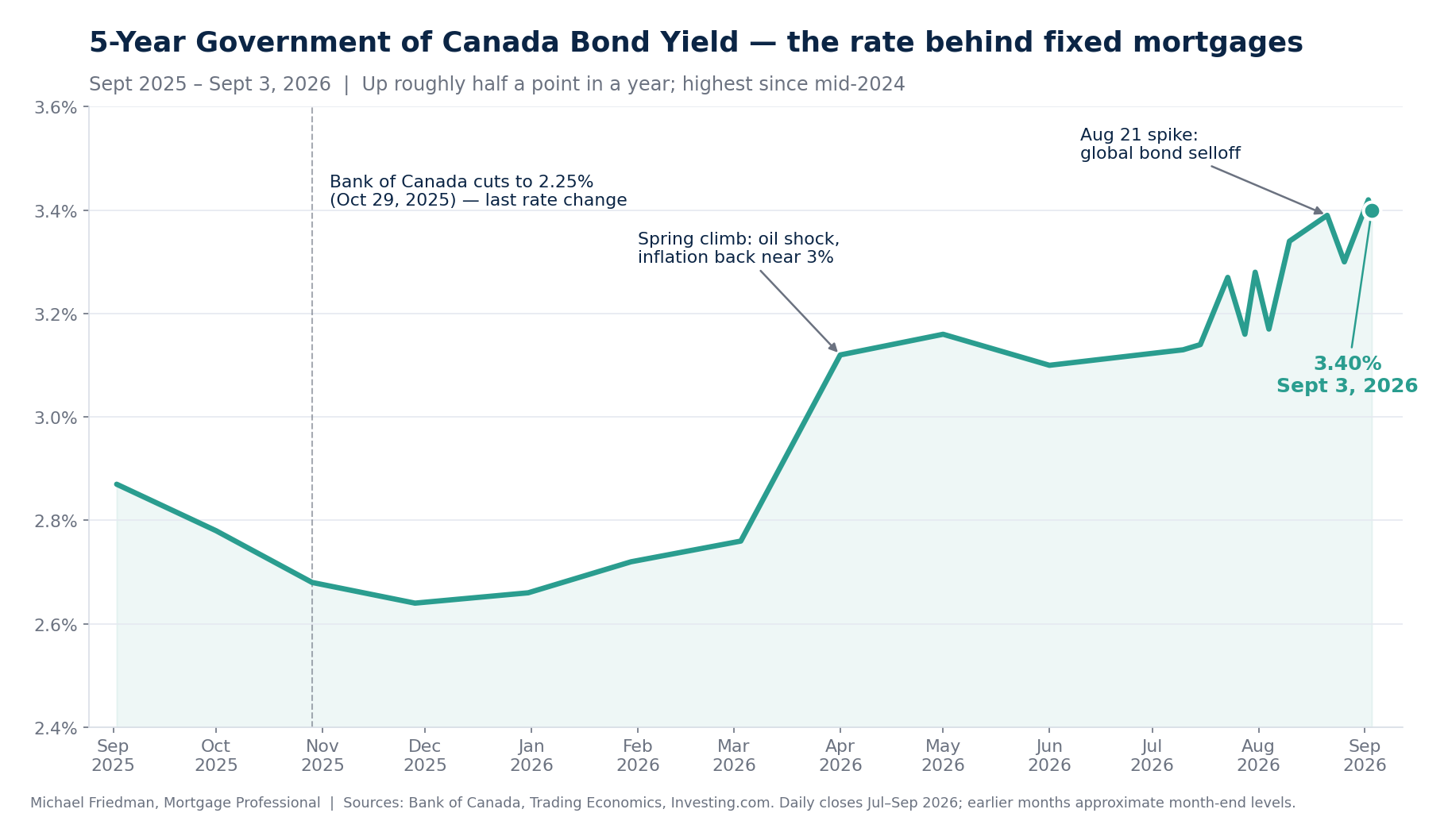
What’s happening now: The 5-year bond yield is 3.4% today, up about a quarter-point in the past month and at its highest since mid-2024. Long-term yields are rising around the world, oil is near $90, and the U.S. Federal Reserve may raise rates this month. Trade-war worries pull the other way. The result is a bumpy bond market and fixed rates that are drifting higher, not lower.

Buying? Get a 120-day rate hold. It’s free. If rates drop, you get the lower rate. If they rise, you’re protected. Realtors: every client shopping this fall should have one before they write an offer.
Pre-approved more than 60 days ago? Get it refreshed. Rates have moved, and so has the qualifying math.
Renewing in the next 12 months? Start now, not when the letter arrives. Starting 120–180 days early gives us time to hold a rate, compare lenders, and restructure if it improves your monthly cash flow.
The next Bank of Canada decision is October 28. I’ll post another update once it’s out.
Michael Friedman
Mortgage Professional
Licensed in British Columbia & Alberta
Rates and yields as of September 3, 2026 and change daily. General market commentary, not individual advice.


 Copyright © 2026 Michael Friedman. All Rights Reserved.